Search This Blog

Interested In Looking For a Home?

Have questions? Thinking about looking?

Tuesday, January 17, 2012

5 tips for Buying in 2012

Lowe's Inside Out Home Improvement Tips | Produced by Inman News

Click the link to read a great article. I took the best chunk from of it and you can read it below:

HOUSE HUNTING TIP: Some buyers who can afford to buy today and would like to take advantage of low interest rates are holding back due to fear. There is risk involved in buying a home in today's market; prices could move lower before they improve. There is also risk if you want and need to buy and you postpone it.
We are living in unprecedented times. Home prices have dropped more during the recent recession than they did during the Great Depression. Even though another recession might be in the near future, at some point the housing market will improve.
New-home construction has been virtually nonexistent for years. When the foreclosure inventory that has overshadowed the home-sale market diminishes and the job market improves, the housing market will pick up. In areas with a shortage of inventory, home prices are likely to move upward. This is already happening in areas with significant job growth.
For some buyers, it's a good time to buy. Let's say you've outgrown your current home and need a better school district. If you can sell or rent your small home and qualify to buy a bigger house in a better location that will last you for decades, you could buy at a discount.


If you have any further questions shoot me an email at Lukeg@comey.com or hit me up on Facebook!


Thursday, December 29, 2011

Thinking about buying in 2012?

Found a great video making very valid points on why purchasing a home in 2012 could be a great opportunity.


Video Link

Sorry for the lack of posts, I recently bought my own place and it has been crazy the past month or so trying to get closed, moved in, and settled!

Best of luck and happy new year!

Thursday, October 27, 2011

Leasing

I know a good amount of my friends are currently leasing homes/condos/apartments. This makes sense for a lot of reasons, mainly, it gives you the freedom to move on after a year or whatever the negotiated length of time is.
HOWEVER, I think it is vital to pay attention to what kind of contract you getting yourself into.
Here are a few things you may not be aware of.

Leases:

  • Can be an oral agreement
  • If landlord collects more than 1 month rent for security deposit, they must deposit the extra amount (beyond what a month costs) into a separate interest bearing account and pay the lessee (you) the interest
  • Landlord cannot retaliate, increase rent, decrease services, bring or threaten action for possession if Tenant:
    1. Complains to the government
    2. Complains of Landlord obligations stated in ORC Section 5321.04 (Ohio Revised Code..see below)
    3. Joins with other tenants in collective negotiations
  • NOTE: The landlord can increase rent for improvement costs or increased operating costs
Landlord Obligations ORC 5321.04

  • Comply with Codes of health, building, housing & safety
  • Repair to make "fit and habitable"
  • Make common areas safe and sanitary 
  • Systems must be safe and working, electric, plumbing, heat, etc
  • If 4 or more units, provide receptacles for garbage and arrange for removal
  • Supply running water, reasonable amounts of hot water and heat
  • Not abuse access rights 


If you have any questions about leasing let me know. I have handle a lot of leases this year as it is becoming quite popular with people who can't afford a home. The most important thing is being in a strong contract, I've seen people get screwed because their landlord has a contract that they (landlord) bought at Staples. The Cincinnati Area Board of Realtors has a very strong contract I use.

If you are currently looking for a place to lease, let me know, I CAN HELP, and best thing is it costs you NOTHING!

Friday, September 16, 2011

Buying vs Renting

My amazing manager at Comey sent out a great email last night pertaining to renting vs buying:


KAREN'S TIP:  The Buying Tipping Point
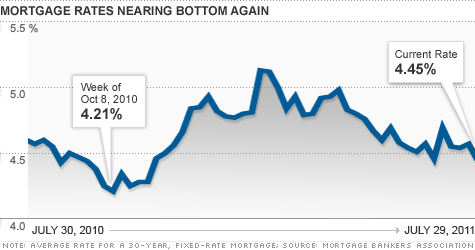
I’ve been saying it for 3.5 years…it is an incredible time to buy…today is even more reason… Rate on 30-year mortgage falls to record 4.09 percent…lowest rate since 1951 when

Average Cost Of New House.... $9.000
Average Wages Per Year.......... $3,510
Cost Of A Gallon Of Gas.......... 19 Cents
Average Cost Of A New Car...... $1,500
Loaf Of Bread.......................... 16 Cents
LB Of Hamburger Meat............. 50 Cents
Bacon Per LB........................... 52 Cents
Eggs Per Dozen....................... 24 Cents

The average cost of a home today in the Greater Cincinnati area?  $167,925  What does this mean to a prospective buyer who is currently renting?  The GinnieMae Buying vs. Renting calculator says…
GinneMae - Buying vs. Renting Calculator Results.jpg

INTERESTING INDEED

Let me know if I can help you in anyway!

Tuesday, August 30, 2011

Getting Mortgage May Never be the Same

Cincinnati Enquirer Mortgage Article


  • Future home buyers would have to put 20 percent down to get the best home loans. Eligible borrowers could owe only a minimum amount of other debt
  • Potentially hardest hit: First-time buyers with little cash and current owners whose home values have fallen, depleting the equity they might have built up
  • Under the proposed new rules, the best mortgages would be reserved for buyers who make 20 percent down payments and whose overall debt is less than 36 percent of gross income
  • In Greater Cincinnati and Northern Kentucky, families would need up to 10 years to save the $25,200 needed for a $126,000 home, the local median price
  • One exception to the new proposed rules would be loans guaranteed by the federal government, including those insured by Federal Housing Administration (FHA). They would continue to operate as today, exempt from the extra costs.

Thursday, August 4, 2011

Wednesday, July 6, 2011

Secrets to getting a mortgage with so-so credit

http://money.cnn.com/2011/07/05/real_estate/mortgage_underwriting/index.htm

Key Points:
  • A good credit score. Borrowers usually need a minimum credit score of 620.
  • Enough income to afford payments. The general rule of thumb: no more than 28% of your gross income should go toward housing costs.
  • A loan-to-value ratio of 80%. Lenders want the home value to far exceed the mortgage balance because if a borrower defaults, the bank sells the home to recoup the loss.
  • The ability to make a 20% down payment, plus closing costs.
  • FHA loans require 580 score for 3.5% down and 500 for 10% down